
Posts Tagged ‘mega backdoor Roth’
2025 Summer Checklist: Is Your Retirement Plan on Track?

Summer’s a strange season for retirement planning. It’s when people slow down, take vacations, unplug a little. But maybe that’s why it works—less noise, more clarity. It’s a good time to sit with your finances and ask: Am I where I need to be? Let’s go through a practical summer checklist. Not everything will apply…
Read MoreRemote Medicine, Real Taxes: What Doctors Working Online Need to Know

The way physicians practice has shifted. If you’re delivering care remotely—full time or just supplementing your income—you’re operating in a different tax environment. One that requires more tracking, more strategy, and yes, more decisions. This guide walks you through what doctors working in telemedicine need to understand about taxes—and how to make it all work…
Read MoreTax Deferral Strategies Every High-Earner Should Know
When you’re earning well into the six or seven figures, taxes can feel like a slow leak on your wealth. You make the money, but you don’t always get to keep it—not right away, at least. That’s where tax deferral strategies come in. They don’t eliminate taxes, but they shift the timing. Done right, they…
Read MoreW-2 vs. 1099 for Doctors: Which Saves More on Taxes?
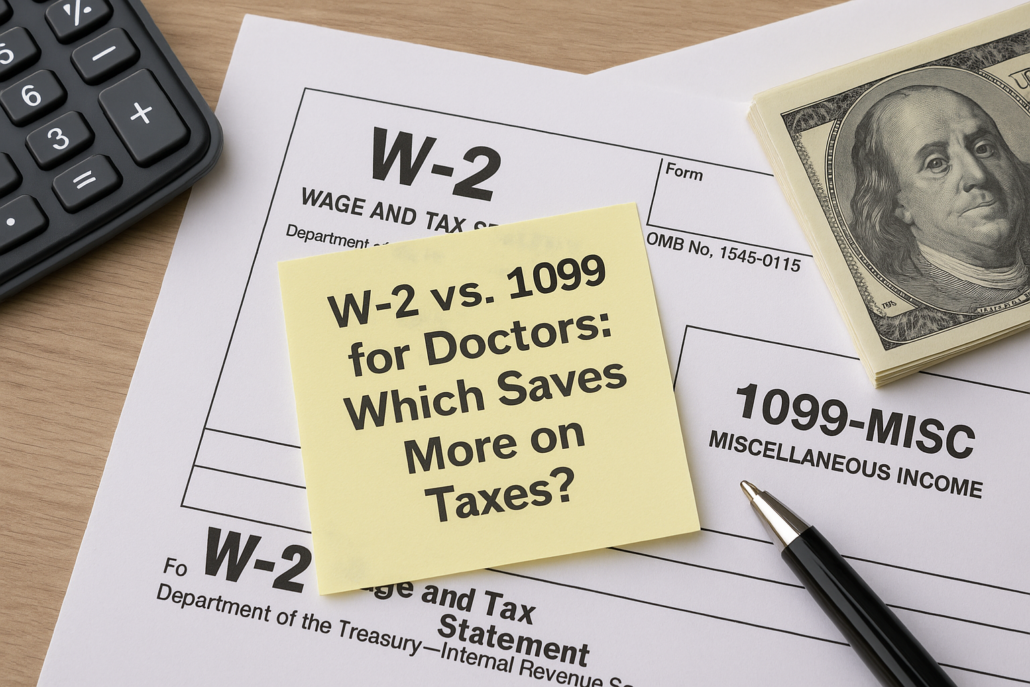
Not all income is treated the same—especially when you’re a physician. Whether you’re working as a full-time W-2 employee or contracting as a 1099 independent doctor, how you’re classified can make a real difference on your taxes, deductions, and long-term financial strategy. Let’s walk through what each option really means, what it costs you, and…
Read MoreMid-Year Tax Planning Checklist for Busy Professionals
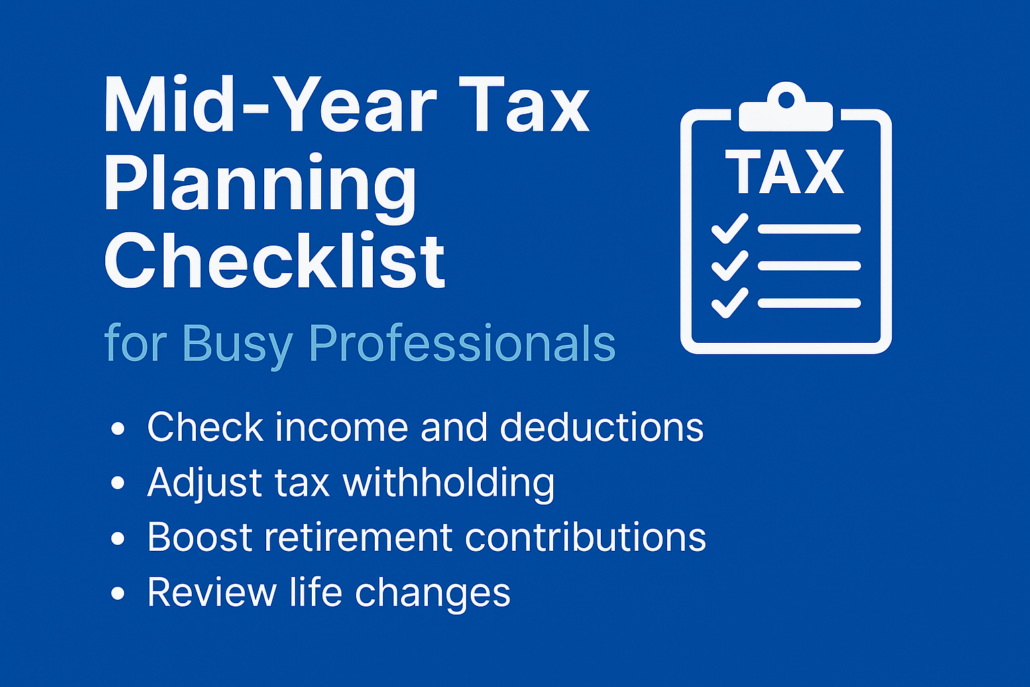
By the time June rolls around, most people stop thinking about taxes. But that’s usually when things start slipping through the cracks. If you’re a busy professional, you already know how quickly the year can get away from you. And when it comes to tax planning, waiting until December—or worse, April—isn’t exactly a winning strategy.…
Read MoreManaging Your Finances Despite Trump Tariffs

The impact of tariffs, particularly those implemented during the Trump administration, has been felt by businesses and individuals alike. Whether you’re a business owner, an investor, or a consumer, these tariffs can affect everything from product prices to investment strategies. This blog will walk you through how to manage your finances during this turbulent time,…
Read MoreCelebrating Memorial Day with a Roth Conversion? Here’s When It Makes Sense

Memorial Day marks more than just the start of summer. It’s also a smart checkpoint in the year to revisit your finances — especially your retirement strategy. One question you might be asking:Should I do a Roth conversion now? The answer depends on timing, income, tax projections, and your long-term goals. What Is a Roth…
Read MoreStrategies to Reduce Your Tax Liability
Taxes can feel like a heavy burden, but there are many ways you can reduce your tax liability if you take the right steps. Whether you’re a business owner, a high-income earner, or just someone looking to make the most of your finances, understanding tax-saving strategies is crucial. In this guide, we’ll break down the…
Read MoreWhen Does a Roth Conversion Make Financial Sense?

A Roth conversion lets you shift money from a pre-tax retirement account into a Roth IRA. The trade-off: you pay taxes now in exchange for tax-free withdrawals later. Done strategically, a Roth conversion can lower your lifetime tax bill, reduce required minimum distributions (RMDs), and give you more control over retirement income. But the benefits…
Read MoreHigh-Income Earners: Should You Use a Deferred Compensation Plan?
If you’re a high-income professional—particularly a physician—you may be looking for ways to reduce your tax burden while building long-term wealth. One overlooked tool that can help is the deferred compensation plan. But is it the right move for you? Let’s explore how these plans work, how they benefit high earners like doctors and executives,…
Read More