
The Medical Expense Reimbursement Plan (MERP) Guide for High-Earning Practice Owners

The formation of a C corporation brings many benefits to owners, and tax-free fringe benefits can save employees a lot of money. Learn the types of benefits that apply.
Read MoreC-Corp Arbitrage for Physicians: How S-Corp Doctors Unlock Tax-Free Fringe Benefits

The formation of a C corporation brings many benefits to owners, and tax-free fringe benefits can save employees a lot of money. Learn the types of benefits that apply.
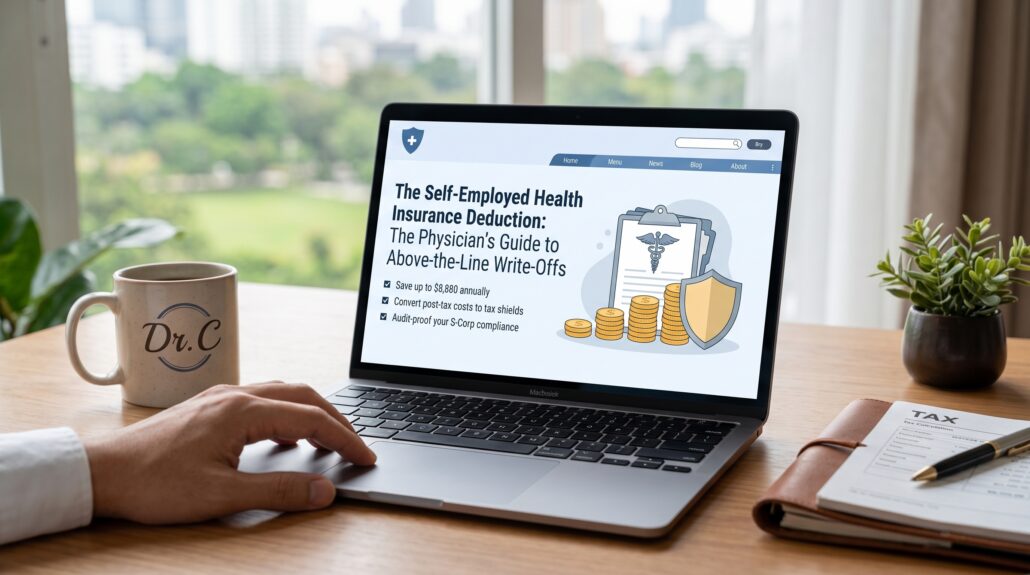
Read MoreThe Self-Employed Health Insurance Deduction: The Physician’s Guide to Above-the-Line Write-Offs
The qualified business income (QBI) deduction represents potentially significant tax savings for your business. Learn whether you qualify and how to maximize this deduction.
Read MoreSection 179 and 100% Bonus Depreciation: The Physician’s Guide to Year-One Vehicle Write-Offs

The qualified business income (QBI) deduction represents potentially significant tax savings for your business. Learn whether you qualify and how to maximize this deduction.
Read MoreThe QBI Deduction Trap: How Physicians Bypass SSTB Phase-Out Limits under Section 199A

The qualified business income (QBI) deduction represents potentially significant tax savings for your business. Learn whether you qualify and how to maximize this deduction.
Read MoreHow 1099 Physicians Can Legally Hire Their Kids and Save $11,000+ Annually

In a Nutshell Here is the main idea upfront. You work long shifts in patient care. You pay nearly half your revenue in high tax brackets. At the same time, you pay for sports gear, summer camps, and tutoring for your kids using personal funds. A physician family payroll strategy lets you turn those personal…
Read MoreThe Cost of Lazy Bookkeeping: How Separating Meal Ledgers Saves Doctors $1,480+ Annually

In a Nutshell The Trap: Lazy, retroactive bookkeeping groups all food-related costs into a single general “Meals” bucket, capping your deduction at a flat 50% across the board. The Power of Separation: By establishing a specialized, customized chart of accounts, you can separate employee events (100% deductible) from business development dining (50% deductible). The Active…
Read MoreThe 12-Hour Rule: How 1099 Physicians and Locums Legally Turn Hospital Shifts Into Major Tax Savings

In a Nutshell If you are a 1099 independent contractor physician working shifts that last over 12 hours door-to-door, you can combine a compliant home office setup with IRS travel rules to convert your daily commute into a fully deductible business trip. By establishing your home space as your primary administrative center, you write off…
Read MoreStop Leaving Money on the Table: How to Get the Biggest Home Office Tax Deduction Possible

In a Nutshell W-2 medical employees cannot deduct any home office expenses under current tax laws. 1099 independent contractors, including telehealth providers and locum tenens physicians, qualify for significant tax write-offs. The simplified method gives you a quick flat rate but often leaves thousands of dollars on the table for high earners. The actual expense…
Read MoreThe Ultimate Guide to Owning a Short-Term Rental: Pros and Cons for Doctors

originally posted on :July 27, 2022 In a Nutshell Short-term rentals can generate significantly higher cash flow than traditional long-term properties, but they require active business management. For high-income medical professionals, the real power lies in a specific tax strategy. If your guests stay an average of seven days or less, the IRS views…
Read More