
Tax tips
The 12-Hour Rule: How 1099 Physicians and Locums Legally Turn Hospital Shifts Into Major Tax Savings

In a Nutshell If you are a 1099 independent contractor physician working shifts that last over 12 hours door-to-door, you can combine a compliant home office setup with IRS travel rules to convert your daily commute into a fully deductible business trip. By establishing your home space as your primary administrative center, you write off…
Read MoreStop Leaving Money on the Table: How to Get the Biggest Home Office Tax Deduction Possible

In a Nutshell W-2 medical employees cannot deduct any home office expenses under current tax laws. 1099 independent contractors, including telehealth providers and locum tenens physicians, qualify for significant tax write-offs. The simplified method gives you a quick flat rate but often leaves thousands of dollars on the table for high earners. The actual expense…
Read MoreThe Ultimate Guide to Owning a Short-Term Rental: Pros and Cons for Doctors

originally posted on :July 27, 2022 In a Nutshell Short-term rentals can generate significantly higher cash flow than traditional long-term properties, but they require active business management. For high-income medical professionals, the real power lies in a specific tax strategy. If your guests stay an average of seven days or less, the IRS views…
Read MoreIt’s How You Earn, Not How Much: A Physician’s Guide to Income-Type Tax Planning
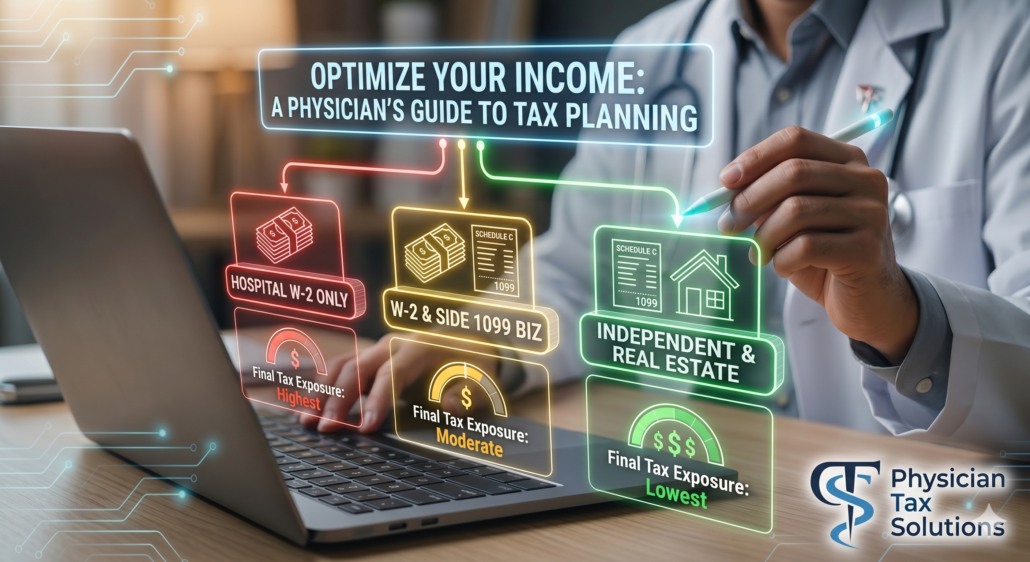
In a Nutshell The W-2 Trap: Employed doctors carry the heaviest relative tax burdens due to high ordinary brackets and a total lack of standard business deductions. The Core Shift: Your total tax liability depends entirely on how you make your money rather than the gross amount you earn. The 1099 Path: Adding even a…
Read MoreSold Nvidia, Apple, or Tesla Stock? Don’t Forget the Tax Bill

In a Nutshell If you sold shares of Nvidia, Apple, or Tesla and walked away with a profit, the IRS wants a piece. Here is the short version: Selling stock for a gain triggers a tax bill, even if you reinvest the money. Short-term gains (held one year or less) are taxed at your regular…
Read MoreThe Complete Guide to Quarterly Estimated Taxes

In a Nutshell Quarterly estimated taxes are payments you send to the IRS four times a year on income that doesn’t have taxes withheld. For 2026, the deadlines are April 15, June 15, September 15, and January 15, 2027. If you’re a doctor with side income, run a private practice, or work as a locum…
Read MoreBest Tax Preparation Services for Physicians With Multiple Income Sources

In a Nutshell Physician tax preparation services aren’t just regular tax help with a fancy label. If you’re a doctor juggling a W-2 hospital job, some 1099 locum shifts, maybe a side telehealth gig, and a rental property or two, your taxes are not “regular person” taxes anymore. You need a specialist. The best tax…
Read MoreW-2 and 1099 Physician Income Safe Harbor Rules: A Beginner’s Guide
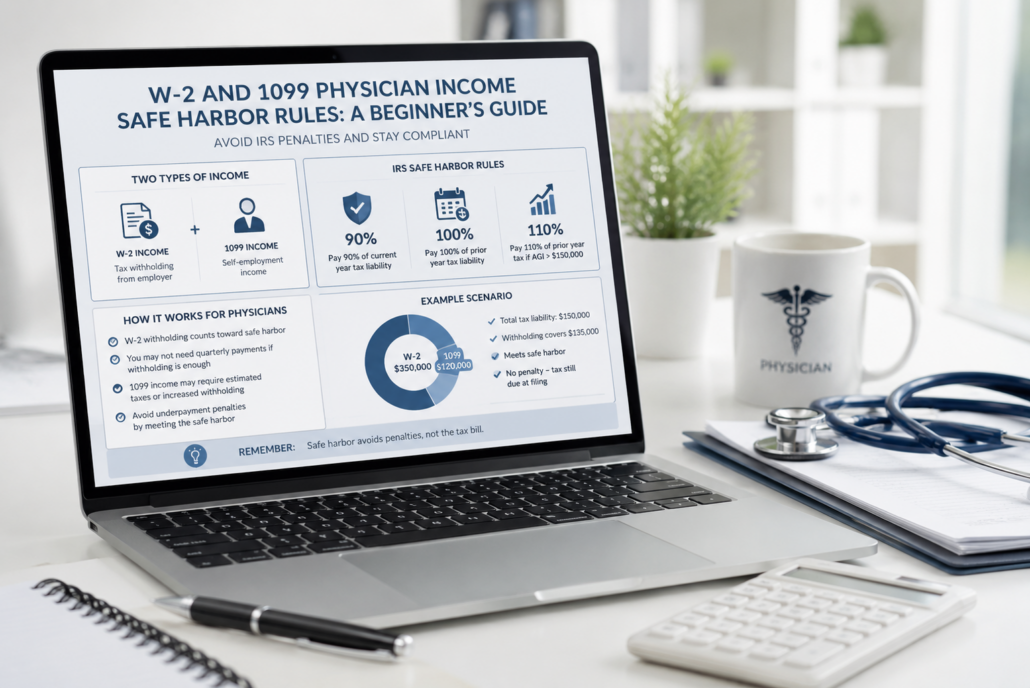
In a Nutshell If you’re a physician earning income from both a hospital job (W-2) and side gigs like locums or telehealth (1099), the IRS expects you to pay taxes as you earn, not just in April. The irs safe harbor rule is your shield against underpayment penalties. Pay either 90% of what you’ll owe…
Read MoreS Corp vs Professional Corporation (PC) vs PLLC: What Physicians Need to Know

In a Nutshell Picking the right business structure as a physician isn’t just paperwork. It directly affects how much tax you pay, how protected your personal assets are, and whether your state will even let you operate the way you want. Here’s the short version: A Professional Corporation (PC) is a formal corporate structure that…
Read MoreThe Accountable Plan Setup for Physician Practices: A Step-by-Step Guide
In a Nutshell An accountable plan is a written, board-approved policy that lets your practice reimburse you for legitimate business expenses you paid personally, tax-free. It works best for physicians running an S-corp or PLLC taxed as an S-corp, where you wear two hats: owner and W-2 employee. Done right, it can quietly move thousands…
Read More